 Pristupačnost
.jpg)

KORISNE POVEZNICE
KORISNE POVEZNICE


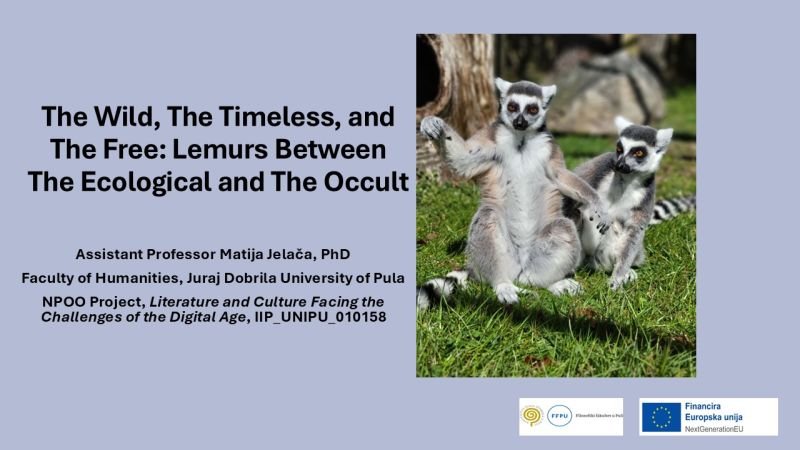
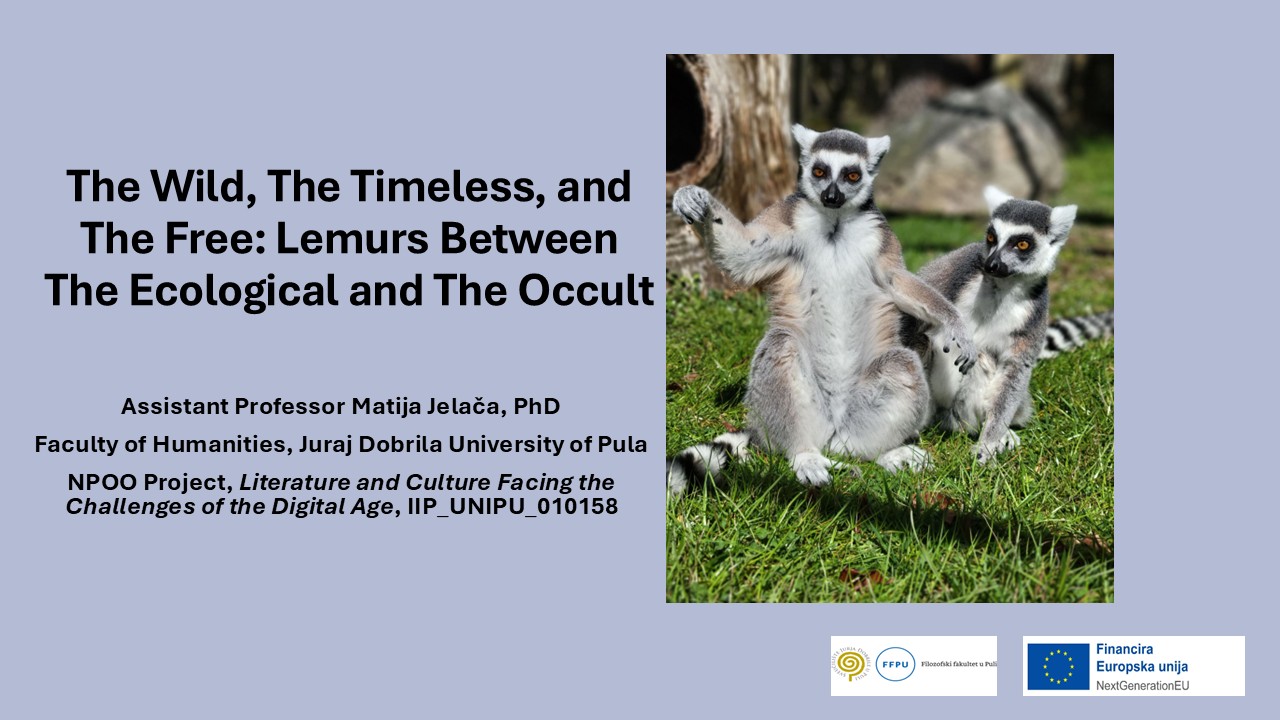
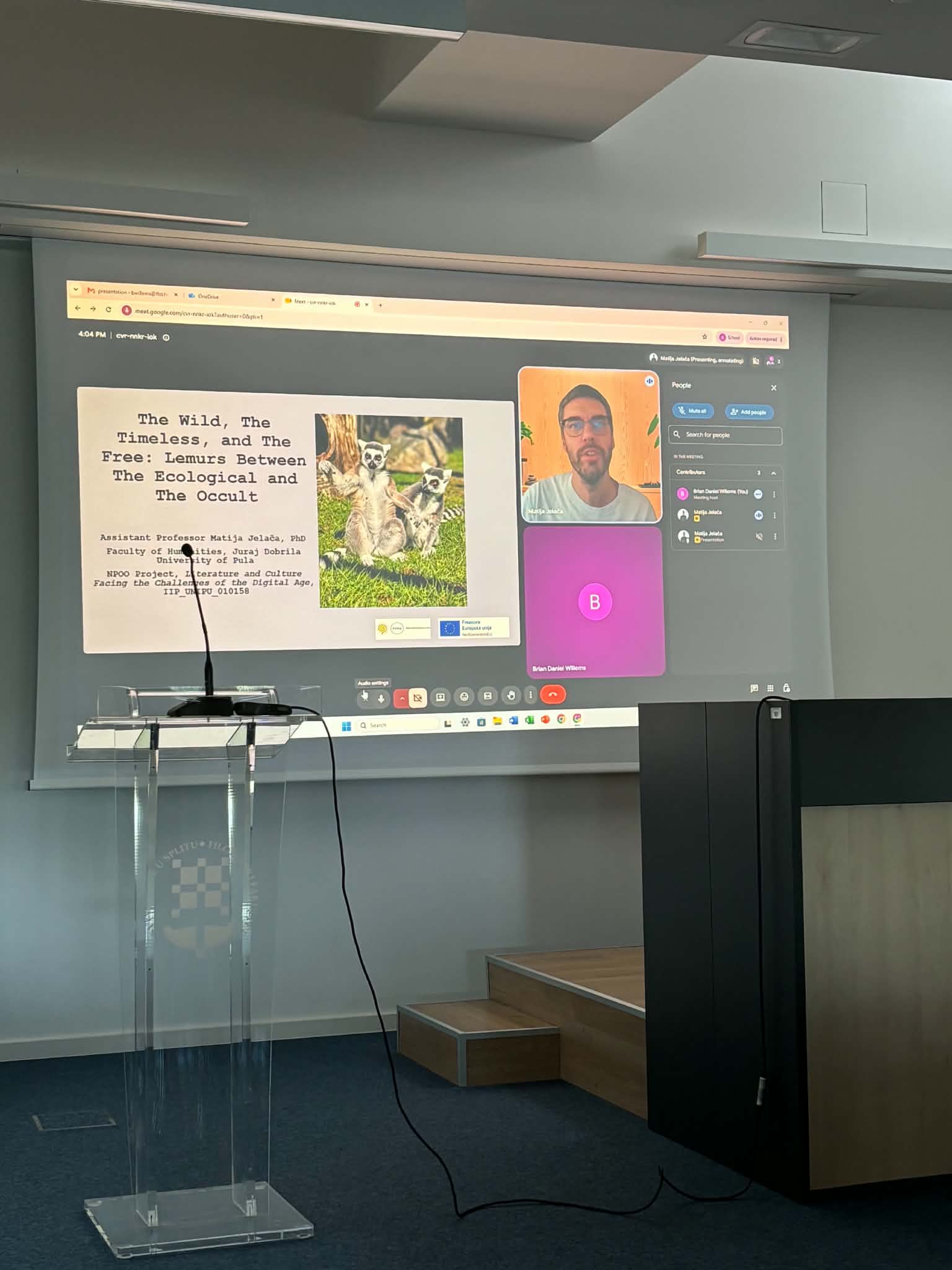
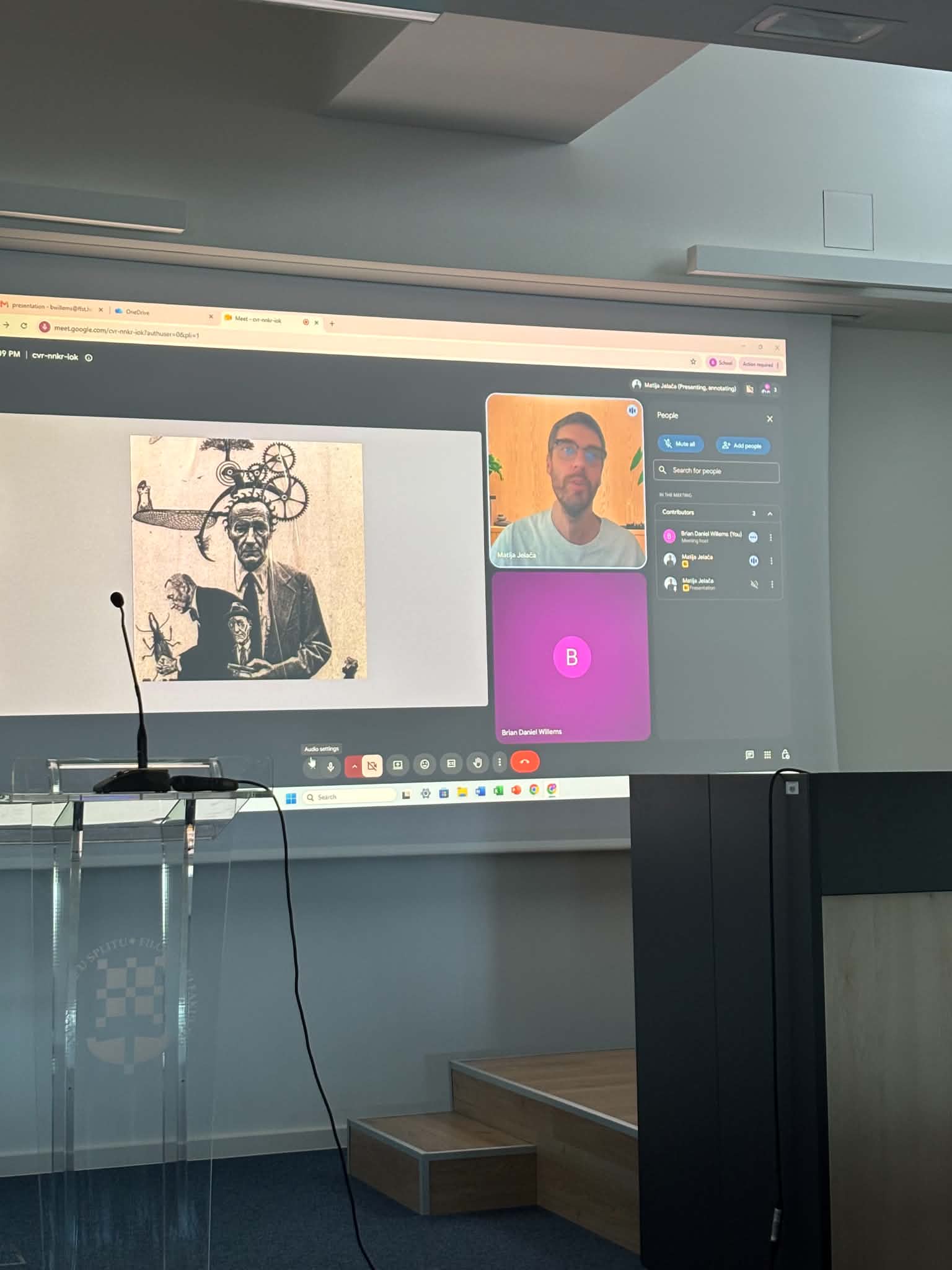
Voditelj projekta Književnost i kultura pred izazovima digitalnog doba (KKIDD) doc. dr. sc. Matija Jelača održao je u petak, 4. rujna online izlaganje pod naslovom „The Wild, The Timeless, and The Free: Lemurs Between The Ecological and The Occult” na međunarodnom znanstvenom skupu Literary Representations of Co-Existence koji se održao na Filozofskom fakultetu u Splitu od 3. do 5. rujna 2026. Izlaganje je nastalo u okviru istraživačke dionice projekta “Viralni narativi i umjetničke prakse u digitalnom svijetu”.
Sažetak:
William S. Burroughs' short story The Ghost Lemurs of Madagascar tells the tale of „the libertarian pirate“ Captain Mission who around 1700 decided to settle down permanently on Madagascar and establish the „free colony of Libertatia“ by which he „threatened to demonstrate for all to see that three hundred souls can coexist in relative harmony with each other, their human neighbours, and the ecosphere of flora and fauna“. The focal point of the story is Mission’s obsession with lemurs, strepsirrhine primates that share ancestral traits with early primates but have evolved independently of them in isolation on Madagascar. The arrival of humans on the island 2000 years ago has threatened their survival and many of the larger lemur species have since gone extinct. However, as the story claims, in time the natives have instituted a taboo against killing lemurs, which in their language meant “ghosts”. Mission formulated a set of articles “by which the settlement might live in peaceful democracy”, foremost among which was the prohibition of killing lemurs/ghosts. “If any crime deserved the death penalty, also prohibited under the articles, then this was that crime”. While the story is extremely rich and complex in many ways, in essence it represents Burroughs’ personal plea for saving the endangered lemur population of Madagascar, which is made explicit by the author’s note that warns against the threat of “the legacy of 60 million years being destroyed in our lifetime”.
While Burroughs’ story unfortunately did not have the desired effect regarding the fate of real life lemurs, it most certainly made quite a contribution to their symbolic representation in contemporary culture. Most notably, it was taken up by the CCRU (Cybernetic Culture Research Unit) and rearticulated in their famous theory-fiction piece Lemurian Time War. Here, however, Burroughs’ story is construed as “an involvement in an occult time war”, with lemurs representing “the wild, the timeless, and the free” of the Magical Universe, against humanity as “the tame, the time-bound, and the tethered” of the One God Universe.
This talk will address the glaring issue that confronts the reader of these two texts: how has an ecological plea for an endangered species become rearticulated as an occult time war between mystical otherworldly forces?


Sveučilište Jurja Dobrile u Puli
A: Zagrebačka 30
52100 Pula
Hrvatska
T: +385 52 377 024
E: ured@unipu.hr
W: www.unipu.hr
Studenti: ured-za-studente@unipu.hr
T: +385 52 877 423, +385 52 877 435
Istaknuti sadržaj


